


How the Right Safety Footwear Helps Businesses Reduce Costs and Improve Workplace Safety

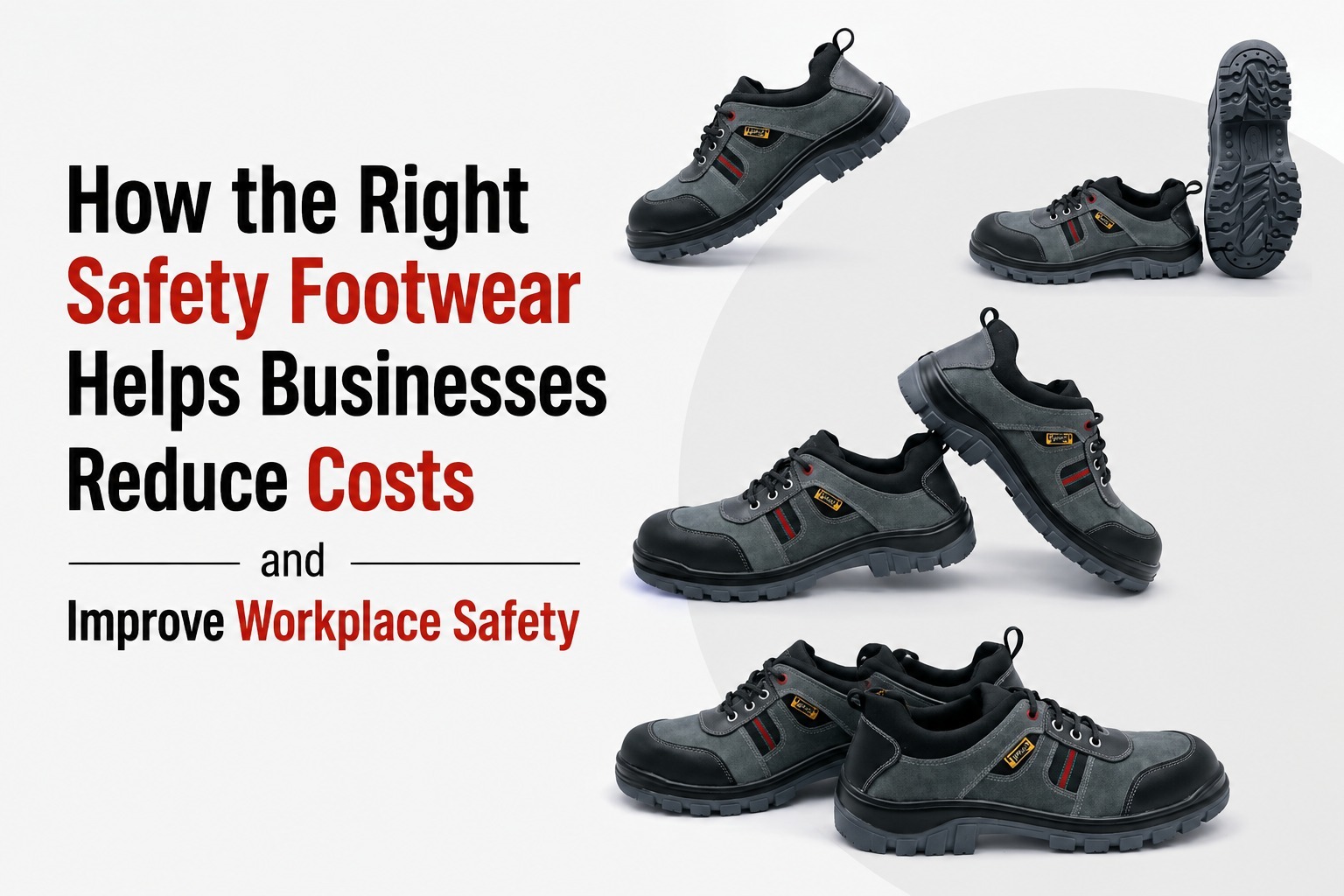
Workplace safety is not only about following regulations—it is also about protecting employees, maintaining productivity and controlling operational costs. In industries such as construction, manufacturing, engineering, logistics, power and heavy industry, workers are regularly exposed to hazards that can cause serious foot injuries.
One of the most important yet often overlooked areas of personal protective equipment (PPE) is safety footwear.
The right pair of industrial safety shoes can help protect workers from impact, compression, sharp objects, slippery surfaces, water, oil and other workplace hazards. More importantly, investing in durable and appropriate footwear can help businesses reduce avoidable expenses associated with injuries, frequent replacements, downtime and lost productivity.
Choosing safety footwear based only on the lowest purchase price can therefore become an expensive decision in the long run.
Why Safety Footwear Is Important in the Workplace
Workers spend a large part of their working day on their feet. In industrial environments, their feet can be exposed to falling objects, heavy materials, sharp surfaces, slippery floors and challenging working conditions.
A properly selected pair of industrial safety shoes provides an additional layer of protection between the worker and these hazards.
Depending on the workplace requirements, safety footwear can provide features such as:
- Steel or non-metallic toe protection
- Slip-resistant soles
- Oil and chemical resistance
- Water-resistant materials
- Impact and compression protection
- Durable outsoles for demanding environments
- Comfortable insoles for long working hours
Leather Craft manufactures industrial safety footwear designed for demanding environments, with products available for construction, manufacturing and other heavy-duty applications. The company states that its footwear is tested to relevant Indian standards and offers both steel and non-metallic toe options.
1. The Right Safety Shoes Help Prevent Workplace Injuries
One of the biggest benefits of quality safety footwear is injury prevention.
In industrial workplaces, workers may encounter:
- Falling tools and materials
- Heavy machinery
- Sharp metal pieces
- Nails and other floor hazards
- Wet or oily surfaces
- Chemical exposure
- Uneven working areas
A suitable safety shoe can help reduce exposure to these hazards.
For example, steel toe safety shoes are designed to provide protection against impact and compression hazards, while appropriate slip-resistant soles can help improve stability on potentially slippery surfaces.
The key is selecting footwear according to the actual hazards present in the workplace rather than choosing the same shoe for every application.
2. Quality Footwear Can Reduce Long-Term Costs
When purchasing safety shoes for a large workforce, businesses naturally look at the price per pair.
However, purchase price is not the same as total cost of ownership.
Low-cost footwear that wears out quickly may need to be replaced more frequently. If workers also experience discomfort or poor fit, businesses may face additional problems with employee compliance and productivity.
A durable pair of industrial safety shoes can provide better long-term value through:
- Longer service life
- Fewer replacement cycles
- Better protection
- Improved worker comfort
- Reduced maintenance and procurement frequency
In other words, businesses should evaluate cost per period of use, rather than simply comparing the initial purchase price.
3. Better Comfort Can Improve Worker Productivity
Safety footwear should not only protect workers—it should also be comfortable enough to wear throughout the working day.
Workers who spend 8–10 hours on their feet can experience discomfort when footwear has poor fitting, inadequate cushioning or insufficient support.
Comfortable industrial footwear can help workers remain focused on their tasks rather than constantly adjusting or removing uncomfortable shoes.
Important comfort factors include:
- Correct sizing
- Proper foot support
- Breathable materials
- Shock absorption
- Appropriate insole design
- Suitable shoe weight
- Adequate toe space
This is particularly important when companies are purchasing footwear in bulk. A shoe that works well for one worker may not necessarily be suitable for every employee.
4. Durable Safety Footwear Reduces Replacement Frequency
Industrial workplaces can be demanding on footwear. Workers may walk on concrete floors, operate machinery, work outdoors or encounter oil, water and other substances.
Poor-quality footwear can deteriorate quickly under these conditions.
Durable safety shoes designed for industrial applications can help businesses reduce unnecessary replacement cycles.
When evaluating footwear, procurement teams should consider:
Material + Sole + Protection + Comfort + Expected Usage
rather than focusing exclusively on price.
Leather Craft offers industrial footwear made for heavy-duty environments and lists features including full-grain leather options, double-density PU soles and protective toe-cap technologies across its product range.
5. The Right Footwear Supports Workplace Safety Compliance
Personal protective equipment plays an important role in an organization’s overall safety programme.
However, simply purchasing safety shoes is not enough.
Businesses should make sure that:
- The footwear is appropriate for the identified workplace hazards.
- Workers receive the correct sizes.
- Employees understand why the footwear is required.
- Damaged footwear is replaced promptly.
- Safety footwear is inspected periodically.
- Procurement teams verify applicable certifications and standards.
For Indian industrial buyers, checking applicable standards and certification requirements is especially important when selecting safety footwear.
Leather Craft states that its safety products are tested according to IS 15298:2011 and that its safety footwear includes ISI and DGMS-approved offerings. Businesses should always verify the certification and approval applicable to the specific model they are purchasing.
6. Choosing Footwear According to Workplace Hazards
There is no single safety shoe that is ideal for every workplace.
Before purchasing, businesses should conduct a basic hazard assessment.
Construction Sites
Construction workers may encounter falling materials, uneven surfaces, sharp objects and wet conditions.
Recommended considerations: toe protection, durable construction, slip resistance and suitable water resistance.
Manufacturing Units
Manufacturing environments may involve machinery, metal components, oil and long hours of standing.
Recommended considerations: impact protection, slip resistance, durability and comfort.
Engineering and Heavy Industry
Heavy engineering environments can expose workers to heavy components, sharp materials and demanding floor conditions.
Recommended considerations: strong toe protection, durable soles and resistance to relevant workplace substances.
Logistics and Warehousing
Warehouse workers frequently walk and stand for extended periods while handling materials.
Recommended considerations: toe protection, grip, lightweight construction and all-day comfort.
The correct choice should always be based on the specific workplace risk assessment.
7. Safety Shoes Can Help Reduce Downtime
A workplace injury can affect more than the employee involved.
An incident may result in:
- Employee absence
- Work interruption
- Replacement labour requirements
- Reduced productivity
- Investigation time
- Additional administrative work
- Potential compensation and other business costs
Preventive safety measures can therefore contribute to operational continuity.
While safety footwear cannot eliminate every workplace accident, appropriate PPE is an important part of a broader workplace safety programme.
8. Bulk Purchasing Can Improve Procurement Efficiency
For companies managing hundreds or thousands of workers, safety footwear procurement can become a recurring operational task.
Working with a reliable safety shoes manufacturer in India can simplify the process through:
- Consistent product quality
- Bulk supply
- Multiple size availability
- Product standardization
- Better procurement planning
- Customized or private-label requirements
- Ongoing supplier support
Leather Craft offers industrial safety footwear and PPE solutions for businesses, contractors, distributors and industrial projects, including bulk supply and custom branding options.
How Businesses Can Choose the Right Safety Footwear
Before placing a bulk order, procurement and safety teams should evaluate the following factors:
1. Identify Workplace Hazards
Understand the risks workers face every day.
2. Select the Appropriate Protection
Choose steel toe, non-metallic toe or other protection according to the application.
3. Check Applicable Standards
Verify the relevant Indian or industry-specific standards and certifications for the product.
4. Prioritize Fit and Comfort
Ensure workers have access to the correct sizes and suitable footwear designs.
5. Evaluate Durability
Consider the material, sole construction and expected working conditions.
6. Consider Total Cost of Ownership
Compare expected service life and performance instead of only the initial price.
7. Choose a Reliable Supplier
A dependable manufacturer can help maintain consistent quality and supply for bulk requirements.
Why Businesses Should Think Beyond the Price of a Pair
The cheapest safety shoe is not necessarily the most economical option.
A better purchasing decision considers:
Purchase Cost + Replacement Cost + Durability + Comfort + Protection + Productivity
For example, if inexpensive footwear needs to be replaced frequently, the business may ultimately spend more than it would have by investing in durable footwear from the beginning.
Likewise, if workers find footwear uncomfortable and avoid wearing it correctly, the business may not receive the intended safety benefit.
The goal should therefore be maximum protection and value over the footwear’s useful life.
Why Choose Leather Craft for Industrial Safety Footwear?
Leather Craft is an Indian manufacturer of industrial safety footwear and PPE products, established in Nagpur, Maharashtra. The company serves industries including construction, manufacturing, power and heavy engineering.
Its product range includes industrial safety shoes with options such as steel and non-metallic toe protection, double-density PU soles and designs intended for heavy-duty working environments.
For businesses looking for reliable footwear for their workforce, selecting a supplier that understands industrial requirements can make procurement easier and more consistent.
Frequently Asked Questions About Safety Footwear
What are safety shoes used for?
Safety shoes are protective footwear designed to help protect workers’ feet from workplace hazards such as impact, compression, sharp objects, slips and certain environmental conditions.
Why are steel toe safety shoes important?
Steel toe safety shoes provide protective reinforcement around the toes and are commonly used in workplaces where workers may face impact or compression hazards.
How do safety shoes reduce business costs?
Durable and appropriate safety footwear can help reduce frequent replacements, support injury prevention, minimize disruption and improve long-term procurement value.
How often should safety shoes be replaced?
There is no universal replacement period. Businesses should inspect footwear regularly and replace it when the protective features, sole, upper or other critical components become damaged or no longer provide the required protection.
Are all industrial safety shoes the same?
No. Safety footwear varies by toe protection, sole design, material, resistance properties, comfort and intended application. The correct footwear should be selected based on workplace hazards.
What should businesses check before buying safety shoes?
Businesses should consider workplace hazards, protection requirements, applicable standards, certification, fit, comfort, durability, expected usage and total cost of ownership.
Final Thoughts
Safety footwear should not be viewed simply as another item on a company’s PPE purchasing list.
The right industrial safety shoes can help protect employees, support workplace safety, improve comfort and provide better long-term value for businesses.
Instead of choosing footwear based only on the lowest price, businesses should consider the complete picture: protection, durability, comfort, compliance and total cost of ownership.
When safety footwear is selected correctly and supported by a strong workplace safety programme, businesses can create safer working environments while making smarter long-term procurement decisions.
Looking for reliable industrial safety shoes for your workforce? Explore the safety footwear range from Leather Craft and choose footwear designed for demanding industrial environments.
Explore: https://lcshoes.in/

